ACCESSION 01 · LANGUAGES & NOTATION
Python
collected: 2022 · status: thriving
evidence: field-tested
The general-purpose field tool joining data preparation, automation, model training, evaluation, and production workflow scripts.
FIELD JOURNAL · VOL. II KEPT SINCE 2022 · ONTARIO, CANADA
observations, experiments & lessons of
a multi-field engineer - training vision models, shipping apps, automating real work with AI, and co-founding RentSwipe along the way.
never make the same mistake twice
don't mine at night
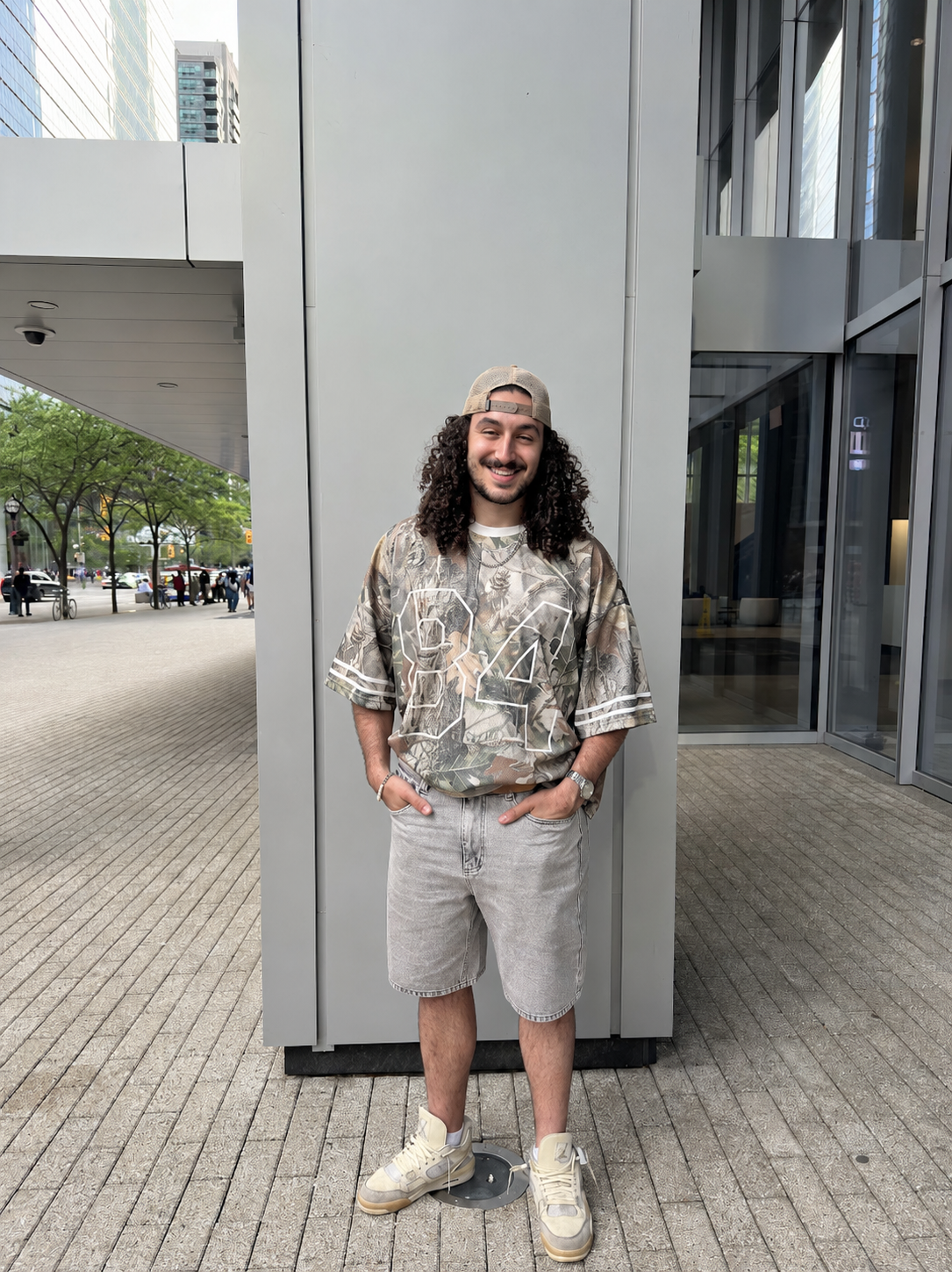
I'm a computer science graduate (Brock, Honours '26) who never learned to stay in one lane. In four years I've trained computer-vision models on 43,088 hand-annotated objects, compressed one until it ran in 1.5 milliseconds on edge hardware, parallelized convolutions across threads and machines, shipped an iOS app on a serverless backend, and taught AI to do a mortgage brokerage's paperwork, saving him ~230 hours a year.
The method never changes: find a field I haven't touched, read till my eyes fall out, build something, then measure it honestly. My degree gave me the fundamentals; the rest - ML dev, Cloudflare Workers, Swift, Rust, agentic AI workflows - I taught myself because a project demanded it.
And the entrepreneurial part isn't a side note: I co-founded RentSwipe and run its engineering, because finding the problem and shipping the fix is the whole point.
functionality over beauty
you can never ask too many questions
skills, collected in the field - each one picked up because a project demanded it
ACCESSION 01 · LANGUAGES & NOTATION
collected: 2022 · status: thriving
evidence: field-tested
The general-purpose field tool joining data preparation, automation, model training, evaluation, and production workflow scripts.
DRAWER I · ACCESSION INDEX
select a label to bring its pressing forward
ACCESSION 13 · COMPUTER SCIENCE & SYSTEMS
collected: 2022 · status: foundational
evidence: coursework
Designing and comparing algorithms by correctness, time and space costs, asymptotic growth, and the workload actually being solved.
DRAWER II · ACCESSION INDEX
foundations, roots, and internal structures
ACCESSION 25 · MACHINE LEARNING & DATA
collected: 2024 · status: flowering
evidence: field-tested
The paired bench for training vision models and inspecting inputs, outputs, failure cases, metrics, and deployment behaviour.
DRAWER III · ACCESSION INDEX
models measured from seed to edge
ACCESSION 37 · PRODUCT, CLOUD & PLATFORMS
collected: 2024 · status: connected
evidence: production
Versioned HTTP contracts with typed payloads, authentication, pagination, error models, rate controls, documentation, and integration tests.
DRAWER IV · ACCESSION INDEX
tools used to ship the work
ACCESSION 49 · AI ENGINEERING & AUTOMATION
collected: 2025 · status: rapidly growing
evidence: production
Designing model-backed systems around explicit inputs, structured outputs, tool boundaries, failure handling, evaluation, and human accountability.
DRAWER V · ACCESSION INDEX
new growth, kept under observation
ACCESSION 61 · ENGINEERING PRACTICE
collected: 2023 · status: repeatable
evidence: field-tested
Unit, integration, regression, acceptance, error-path, and production-verification tests chosen according to the failure being controlled.
DRAWER VI · ACCESSION INDEX
how the field work stays trustworthy
NB: collection grows
every season
each entry marks an experience
press the card to open the herbarium

My current role: I designed, built, and now operate four production pipelines - document intake, email drafting, commitment monitoring, and anniversary reporting. They read real client paperwork, validate it against schemas, cross-check the CRM, and draft outputs a human approves. Together they save the brokerage 230+ hours a year. Debugging OAuth, parsing, and duplicate-run failures in production taught me more than any course.
MATERIALS: TypeScript · Cloudflare Workers · Microsoft Graph · SharePoint · Zoho · Finmo · Claude
saves 4.5 hrs of
paperwork a week

An end-to-end small-object detection workflow I owned from data preparation to deployment: 25 classes, 43,088 annotations, and 30+ training iterations per model of ablation-style tuning. Then the fun part - exporting to ONNX and building a TensorRT FP16 engine that cut inference from 127.8 ms to 1.5 ms while holding accuracy, after proving INT8's accuracy drop wasn't worth the trade.
MATERIALS: Python · PyTorch · OpenCV · ONNX · TensorRT · CUDA
127.8 → 1.5 ms.
still love saying it

The venture: apartment hunting, but swipeable. I built the whole stack - a SwiftUI iOS app on a Cloudflare Workers backend, JWT sessions with role-based access control, and an indexed D1 (SQLite) persistence layer for users, listings, applications, and messages. Plus a trust-and-safety messaging system - block/report workflows, content enforcement, rate limiting - designed for App Store compliance from day one.
MATERIALS: Swift · SwiftUI · Cloudflare Workers · D1 (SQLite) · JWT / RBAC
finding the problem
is half the job
A plagiarism-detection engine for programming courses. I built the C/C++ similarity core - tokenization, normalization, template subtraction, fingerprinting, and Greedy String Tiling - to catch structurally similar submissions, then wrapped it in asynchronous analysis with anonymized, side-by-side reporting. Placed 3rd of 40 teams in the course's competitive evaluation.
MATERIALS: C · C++ · Greedy String Tiling · async pipelines
template subtraction
was the trick
INDEX OF FURTHER EXPERIMENTS
production is where the useful lessons hide
accuracy held; latency did not
trust & safety belongs in the architecture
jitter is seeded - honest charts stay put
Hiring? Building something interesting? Want to trade notes on ML, serverless, or shipping things that work?
- write to me. I read everything.
Ty
good correspondence starts with a specific question
the inbox is checked by a human
everything in this volume, in order of the alphabet